

While students agree there is nothing better than a snow day, most don’t realize the many factors and pieces of information that go into the superintendent’s complex decision-making process about whether a snow day, release, or delay will happen.
It is superintendent Gregory Martineau who ultimately makes the final decision on a snow day. This decision is put into effect after a discussion with superintendents of nearby districts and input from Assistant Superintendent of Operations Keith Lavoie, who assists in contacting the town’s Department of Public Works (DPW) to assess the condition of the roads and transportation. The process begins two weeks before the potential snow day.
“I’m constantly paying attention to the weather, looking out for any projected snowstorms,” Martineau said.
Martineau uses many resources, such as local news stations, Weather Underground, the National Weather Service and the National Oceanic and Atmospheric Administration to study projected weather and make an informed decision on if a storm will impact the school day.
“There is no official deadline; however, [Martineau] does realize that we have staff that travel more than an hour to commute to work,” Lavoie said. “If the decision is made in the morning, the process to determine a snow day starts about 3:30-4:00 AM.”
Martineau talks with Lavoie and constantly communicates with other superintendents to see how the other districts (including Shrewsbury, Westborough and Hopkinton) will respond to the weather.
“It’s literally a combination of dozens of pieces of information to help make a decision,” Lavoie said.
Whether it is the amount of snow or ice on the ground, student and faculty transportation, or even public transportation issues like buses or the DPW, many factors are taken into account before making a snow day decision.
“[The bus companies] have their responsibility to make sure that they’re ready to go regardless of whether or not there’s a foot of snow or an inch of snow; if they had a major issue, like let’s say half the buses didn’t turn on or they’re having significant mechanical issues, they would let us know and we would work with them on a decision,” Lavoie said.
Although students may prefer earlier notice, Martineau likes to announce school days in the morning of the snow day due to the potential for weather to change instead of the night before.
“Sometimes [Martineau] just likes to have a little bit of [additional] information about how a delay or cancellation might be experienced by students, but ultimately whether or not to have a delay or a cancellation is entirely his,” Principal Sean Beavan said.
One of Martineau’s most stressful moments in his career was when every single district called off school except for Northborough and Southborough. Luckily, it was the right decision as the snow prevailed and school was able to happen safely; Martineau still thinks about every one of his calls.
“I always reflect on the call that I made,” Martineau said. “Was that the right call? What would I have done differently?”
Bevan’s role in deciding snow days is surprisingly limited, contrary to popular belief. Despite having authority at Algonquin, Bevan usually finds out about a snow day around the same time as everyone else, including Athletic Director Michael Mocerino, who collaborated with Bevan and Lavoie to determine if athletic events will be held.
“My role is, once I hear that we do have a snow day, I then work collaboratively with the principal and Assistant Superintendent Lavoie, to discuss factors that go into figuring out games and practices,” Mocerino said.
Although school can be canceled, the case for sporting events can be different. Mocerino explained that decisions for such events typically come around noon, and if the weather has changed drastically, the events can proceed as long as conditions are safe.
“I get in touch with all the coaches and opponents if there’s games to let them know that we do not have school and currently, all practices and games are postponed,” Mocerino said.
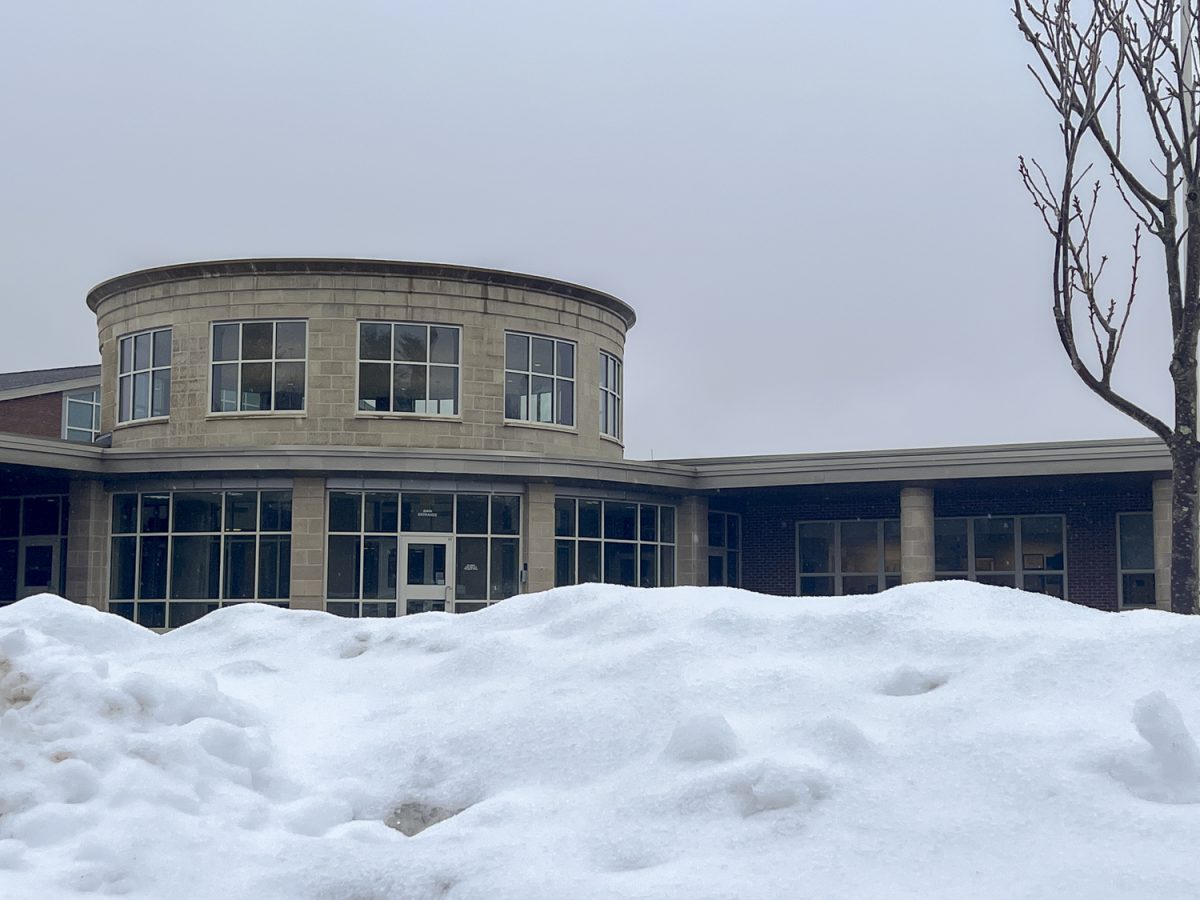
A two hour delay did take place on Jan. 7 due to icy road conditions, but there have been no full days off due to snow thus far this school year. However, there was a snowy day on Dec. 2 and other regional schools had snow days, delays or early releases, which left many students frustrated.
According to a Harbinger survey of 127 students from Dec. 12 to 15 through Google Forms, when asked, “Overall, how well do you think our district handles snow days?” about 60% responded negatively towards the district’s handling of snow days, and many remarked on the district’s inconsistencies with the calls.
One survey respondent said “I think that often we do not get snow days when we should have them. It becomes dangerous especially for new drivers when the road is covered in ice.”
Many students expressed concern about the decisions regarding snow days.
“I felt like [December 2nd] definitely should have been a snow day and especially when my parents are worried about me and my brother getting home safely,” freshman Lila Fialkow said.
These unpredictable decisions have been proven to be inconvenient to students.
“There have been times where there’s no snow at all, and we got a snow day,” senior Jimmy Perez said. “The snow was so light that my parents thought I was lying. Then there are times where it’s really snowing and we still have to go to school.”
Bevan acknowledges many of the struggles that faculty and students may face when it comes to travel in harsher weather.
“Nobody likes driving in the snow,” Bevan said. “It can feel dangerous and uneasy.”
Similar to students, faculty and administrators also enjoy a snow day. Bevan recognizes the impact of a snow day on the school community, as well as the more enjoyable aspects it brings to the table.
“[The adults] remember snow days fondly, and to have a snow day be converted into a school where students are behind a screen isn’t terrific for anybody,” Bevan said. “I think we should be able to [experience] the joy of having a day off, enjoy sleeping [in], wearing your pajamas all day, shoveling a little bit of snow. and having a snowball fight. All those things are not major drivers of decision making, but they are something that is not lost on the adults.”
Martineau faces a lot of stress in making his snow-related decisions, but hopes that students understand the amount of effort and planning that goes into canceling a school day.
“We try to make the best decision based on the information we have, and it’s not a perfect science,” Martineau said. “I’ll be the first one to admit if I make the call wrong.”