

Much like many other retro trends that have resurfaced over the last few years, ‘80s and ‘90s hit pastime Hacky Sack has recently made a popular comeback.
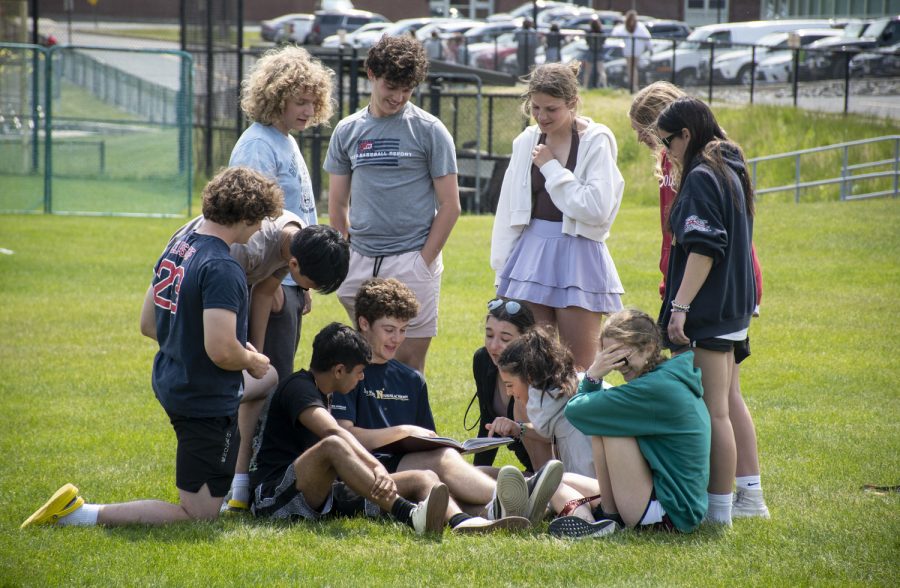
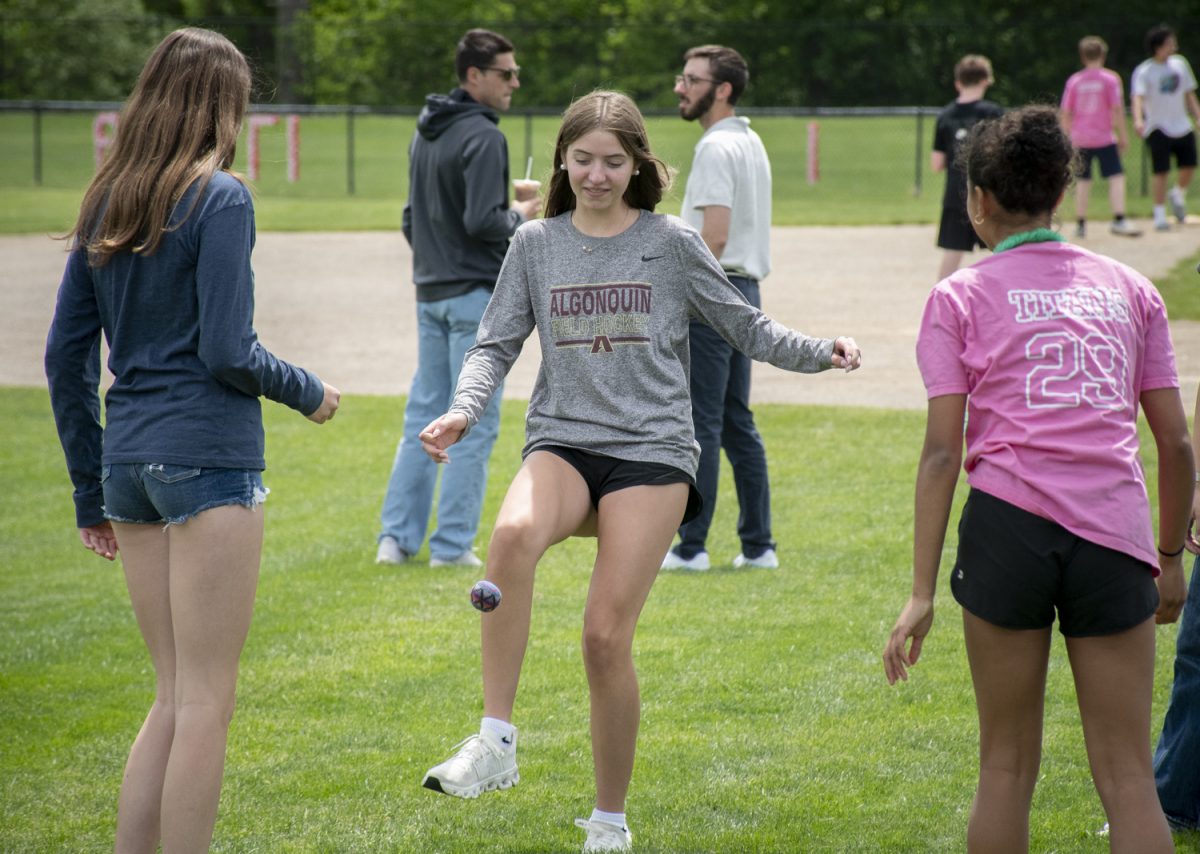
This spring, sidewalks and hallways that were once full of students on devices or scrambling to do homework were quickly replaced by laughter and the familiar thuds of the Hacky Sack, a small crocheted or leather footbag filled with plastic pellets. Hackysackers stand in a circle, kicking the footbag back and forth with the sides and tops of their feet, even including silly techniques in collaboration with other players.
Hacky Sack’s history stretches back to 1972 when Mike Marshall, a man who originally learned the game from a Native American, taught it to John Stalberger, a college football player with a knee injury. After two years of playing the game and adjusting the look of the footbag, the pair officially coined it the Hacky Sack and began selling it. In the early ‘80s, the game’s popularity grew rapidly, especially among teens. In today’s tech-heavy life, social media accounts created to showcase Hacky Sack talent (such as @gonk.sack on Instagram) have taken over the internet and gotten attention from people all over the world, quickly spreading the same way it had in the ‘80s.
Freshman Nate Fawcett, who enjoys playing whenever possible, found the game addictive from the first day he played.
“I played [Hacky Sack] at my house with my friends two months ago,” Fawcett said. “My friend randomly brought up Hacky Sacking and then we all started to play for four hours.”
When Hacky Sack started going viral in April, Fawcett enjoyed how it brought many groups of friends together as a fun break from school.
“It made everyone want to go outside even when it was cold, and it made everyone lose a lot of money because everyone wanted to buy a Hacky Sack,” Fawcett said with a laugh.
Something that has changed since the last time this game went viral is the technique in which the players pass the footbag, often involving challenging but amusing combinations of movements.
“You can hit it with the inside of your foot, the outside of your foot or the top,” Fawcett said. “A lot of people catch it on the back of their neck. They can also catch it on their chest, and other people try to catch it on their chest at the same time.”
English teacher Seth Czarnecki believes that this trend is just one of the many fast-changing movements that naturally seem to come with this generation.
“The ‘90s has been making a comeback over the last five or six years, and I never thought I’d see a Hacky Sack again, yet here I am,” Czarnecki said. “The continuation of Gen Z’s fascination with the ‘90s has just hit its peak.”
Czarnecki appreciates how positive playing Hacky Sack can be.
“I think anything that gets young people moving their bodies and connecting in real life with other people is a good thing,” Czarnecki said. “If [Hacky Sack is] a way that young people can connect and bide their time in something of a meaningful and joyful way, I’m all for it.”
Assistant Principal Janet Brown was recently invited to join a group of students in an attempt to learn how to play. Although Brown says she never had the best hand-eye coordination growing up, she appreciated the sentimental experience
“I love to be in the space where students are playing a game with each other, more than watching a video or sitting,” Brown said. “It makes me happy to see. You’re not missing your time together, and I love that.”
Even though this microtrend of a game has slowly been decreasing in popularity, the heartwarming mark it has left on student life will not be forgotten.
“It’s like this perfect moment that won’t last forever,” Brown said. “It’s so precious to be able to have this social interaction that is possible with school; you don’t always have that. For students to enjoy each other through this non-technological experience, what could be better than that?”