

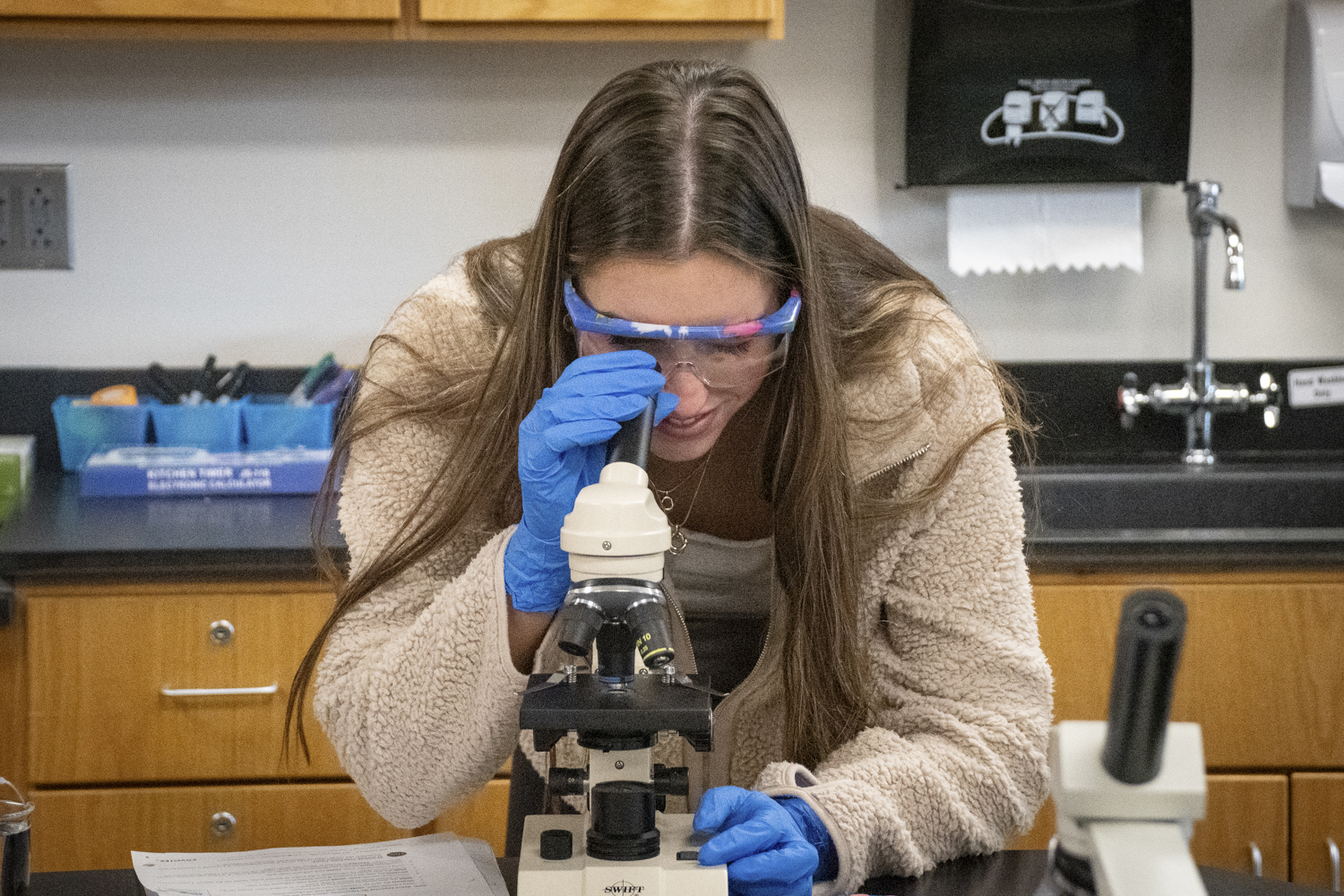

Women have been historically overlooked in science, technology, math and engineering (STEM) fields, but girls are finding their power and voice, with Algonquin bridging the gap every step of the way through its curricula and extracurricular opportunities.
While the number of women in STEM is rising, significant disparities remain. Women only made up 8% of STEM workers in 1970, and today, according to the United States Census Bureau government agency and the organization STEM Women, they continue to hold just 28% of STEM jobs and are 31% of college STEM graduates today.
As the battle for equality continues, Algonquin is part of the movement working to close the gender gap by fostering a supportive and inclusive environment, as well as establishing clubs like Women in Science and Engineering and Girls Who Code.
Science Department Head Elisa Drake is aware of historical gender-based stigmas in STEM fields.
“If you go back a few decades ago, there definitely was sort of a stigma surrounding women in STEM, and there were also different social factors that kept women out of the workforce,” Drake said. “There also were factors such as access to education that prevented [women from going into STEM].”
Girls are often outnumbered in STEM areas; as a result, many face societal biases and develop the sense that they don’t truly belong, which can affect their confidence and willingness to participate.
“Girls tend to be a little more reserved,” Drake said. “If you read about how girls and women participate in classrooms and in meeting settings, they’re less likely to raise their hand than a boy or a male.”
Similarly, math teacher Mary Rose Steele has observed comparable trends behind girls’ engagement in STEM.
“I personally think what holds the girls back is that they don’t have enough confidence to just try something,” Steele said.
These challenges are often visible in specific classroom experiences, where hesitation to participate can affect learning and engagement.
“In geometry honors, I gave them a really hard problem on the first day of school, and I was like, ‘Just write something down and try it, and then from there we’ll learn,’ and a lot of my female students didn’t put pen to paper,” math teacher Gwenevere Fazio said.
Junior Caitlin O’Hearn, who is an aspiring woman in STEM and Health Occupations Students of America (HOSA) president, also views the issue as one that should be addressed on a larger scale.
“I really wish that less [girls] just accepted the fact that they were bad at something,” O’Hearn said. “I feel like so many girls are like, ‘Oh, I’m bad at math; it doesn’t work for me,’ and I feel like there isn’t enough flexibility [in mindset and encouragement].”
The stereotype that girls “just aren’t good at STEM” has caused many, including O’Hearn, to feel underestimated in these spaces.
“I would say it’s kind of annoying, but I feel like the best way to get over that is just to prove someone wrong and stay focused on yourself because you can’t change what people think,” O’Hearn said.
Despite, and perhaps because of, these challenges, the push at Algonquin to empower girls in STEM is more than a trend, but a growing reality shaped by an inclusive environment throughout the school.
“We have a very progressive mindset at this school,” Drake said. “I think we’ve always been pushing a lot of girls and women into STEM fields.”
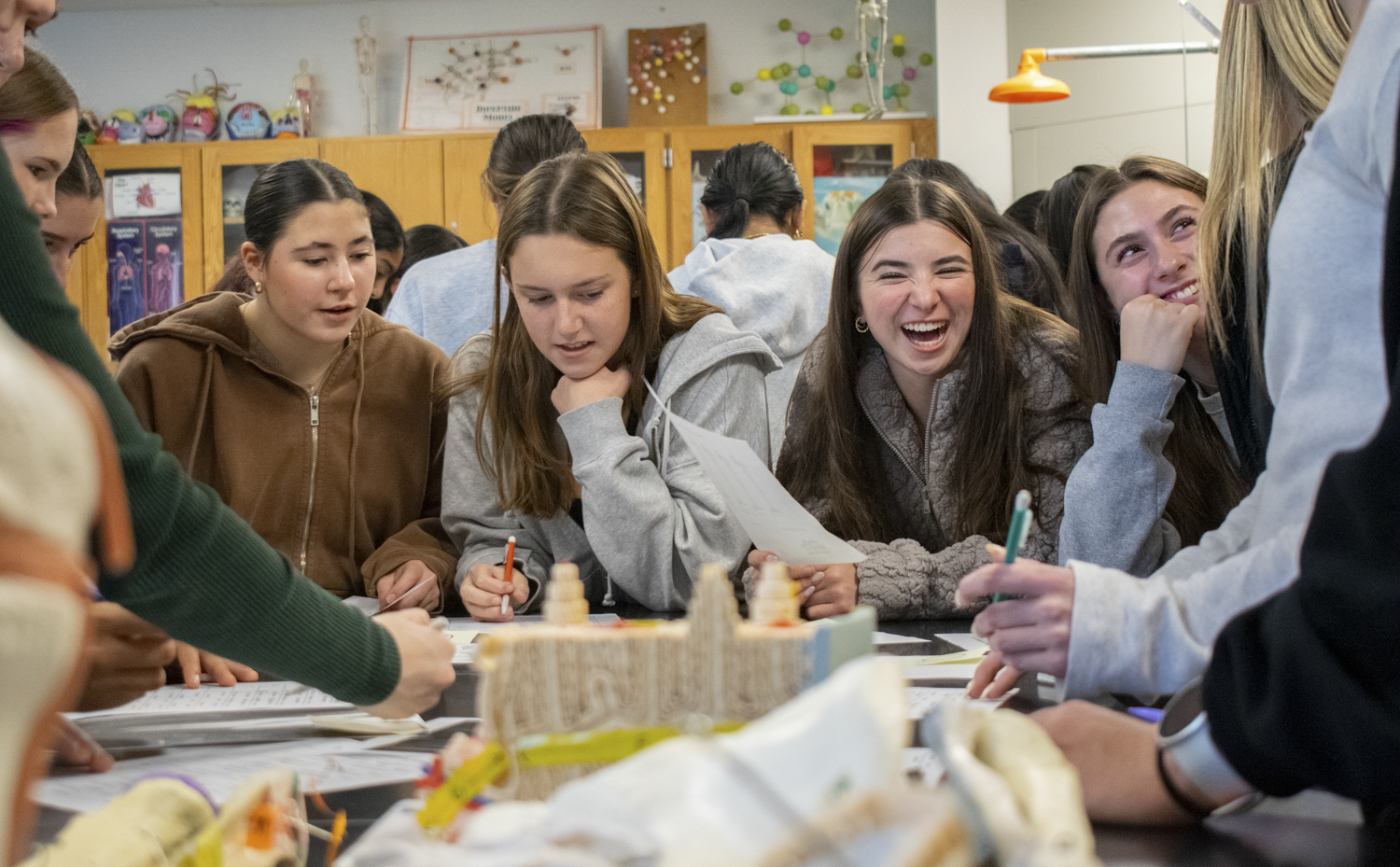
Girls’ increased participation in science-related fields is reflected throughout numerous class demographics. Girls make up over 50% of all students in AP Chemistry and AP Environmental Science. Drake’s AP Biology class this year consists of 71% girls.
“It definitely is very different from when I took an engineering pre-college program summer camp course and there were only four girls out of 16,” Drake said.
Similarly, girls’ strong involvement in high-level math courses reflects growing confidence and interest in multiple STEM fields. Currently, AP Calculus AB & BC consists of 41% girls, and AP Pre-Calculus consists of 50% girls.
“I think we have a pretty good showing of girls in high-level mathematics courses,” Math Department Head Patrick Galvin said.
While girls are thriving in many STEM subjects, specifically life sciences, participation still varies widely by field. In areas such as advanced engineering courses, female students are less represented. This year, girls make up only 21% of all students in AP Physics C, 23% of all students in AP Computer Science Principles and 30% of all students in AP Computer Science A.
“I do think girls and women are trying to still continue to push into those fields where they’re underrepresented and make sure that they’re valued and included, even if they are in the minority there,” Drake said.
Applied Arts Department Head George Clarke reports similar gender demographics in his engineering courses.
“In classes I teach, there’s usually way more boys than girls in my classes,” Clarke said.
Although they are a minority, Clarke believes girls often bring unique strengths and ideas to the field, paving their way to success with these traits.
“A lot of the time, they’re pretty thoughtful about what they’re doing,” Clarke said. “Many times they’re pretty precise with what they’re doing and creative.”
Computer Science teacher Chandler Behringer also praises the girls he has in class for their participation and curiosity.
“All the female students I have in all my AP classes are very dedicated to what they’re doing,” Behringer said. “They want to succeed, they want to know why things are correct [and] why things are the way they are.”
According to Drake many girls have shown unique strengths and unwavering persistence in rigorous science courses, paving the way for the future of STEM.
“[It’s] just the grit,” Drake said. “Not to say other people, boys, men, don’t have grit, but sometimes I feel like girls in the classroom, they get stuck on it and they just want to see it through.”
Extracurricular Support
Outside the classroom, Algonquin offers numerous clubs and extracurriculars to help girls explore the STEM field and feel valued.
“Through Algonquin, there’s been so many opportunities like HOSA, Women in STEM [club], the [Science] Research Club, and Neuroscience [Club],” O’Hearn said. “I’ve just been able to increase my scope a lot.”
Among the plethora of opportunities is the Women in Science and Engineering Club (WISE), where girls explore their interests in STEM while working with like-minded peers in a supportive environment.
“I want to give these girls the opportunity to thrive in a STEM environment among other girls, in which their sense of belonging is never in question,” science teacher and (WISE) club adviser Maria Homberg said via email.
Co-president senior Charlotte Fokema was motivated to become a leader in the club through her personal experiences in the STEM field. Fokema shared that she has felt underestimated and outnumbered in STEM spaces before.
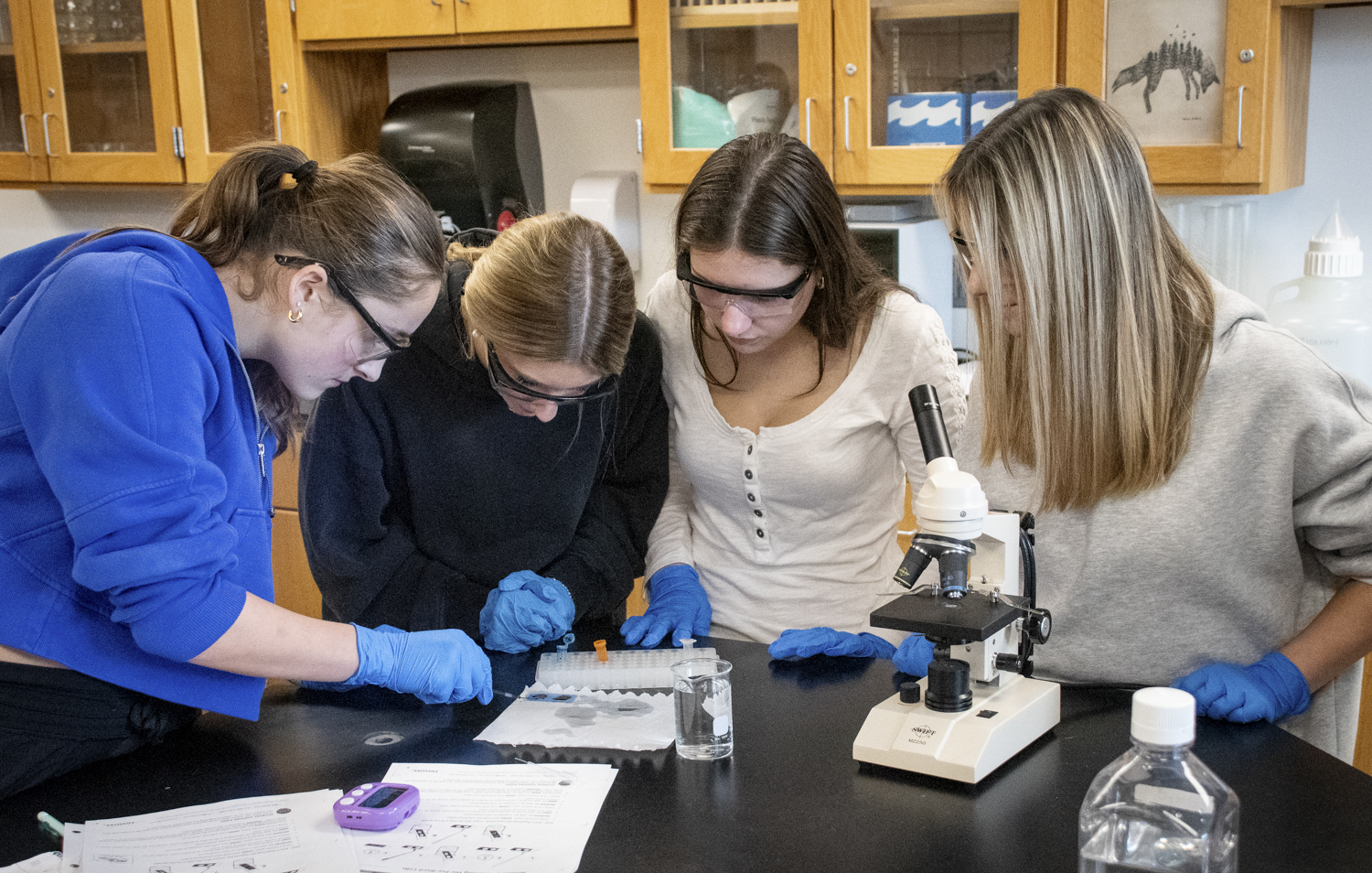
“I have this program that I do after school called Architecture Construction Engineering (ACE), and there were only two other girls,” Fokema said.
Experiences like these highlight the importance of support systems, such as WISE, which Fokema says is creating a space for girls to thrive in their passions.
“[WISE] is giving [girls] a space to actually express themselves,” Fokema said. “It’s about teaching what they’re doing and building awareness for the women in STEM.”
During club meetings, members have fun and learn through STEM projects and experiments, connecting with like-minded peers.
“One time we did this DNA structure thing with Twizzlers and marshmallows,” Fokema said. “We used different colored marshmallows for the different colored bases and the double helix structure, and it was so fun.”
Another newer club, Girls Who Code, was founded by juniors Kristina Dikaramanjian and Rhea Anand in Sept. 2024 to further support girls and promote diversity in the computer science field.
“They liked the general idea of [starting a Girls Who Code Club],” Computer Science teacher and club adviser Kristine Norrman said. “They tried to push females in STEM, and so they approached me about starting the club with the hopes of trying to garner more interest, more females and diversity in general in STEM.”
Dikaramanjian, who has taken AP Computer Science Principles, is no stranger to the gender gap and hopes to help equalize the bias in the computer science field through founding the club.
“I do think [AP computer science classes are] mostly male-dominated, but that’s why we started this club,” Dikaramanjian said.
Through participation in the club, girls have developed their passions for computer science through hands-on coding projects or apps and games.
“I’ve seen a lot of them get more confident in their coding skills or even just thinking about it with people that think similarly to them,” Norrman said. “I think a lot of them are going to be taking some more coding or STEM electives.”
Dikamarajian and other club leaders hope to see the club grow as they strive to include more girls in the STEM field through their support.
“There’s no stereotype in STEM, and it’s not just for guys,” Dikamarajian said. “We just want to get rid of the gender gap.”
Looking Ahead
To truly close the gap, society must also support girls in STEM and provide opportunities to change these often ingrained gender-based mindsets. According to Drake, progress won’t come without a broader shift.
“Society as a whole could work on a mindset shift,” Drake said. “There are still instances in society where women and girls are going to be talked over and looked past, and that’s not a great thing. It’s obviously an awful thing, but some of the bias is definitely still there and it’ll take time.”
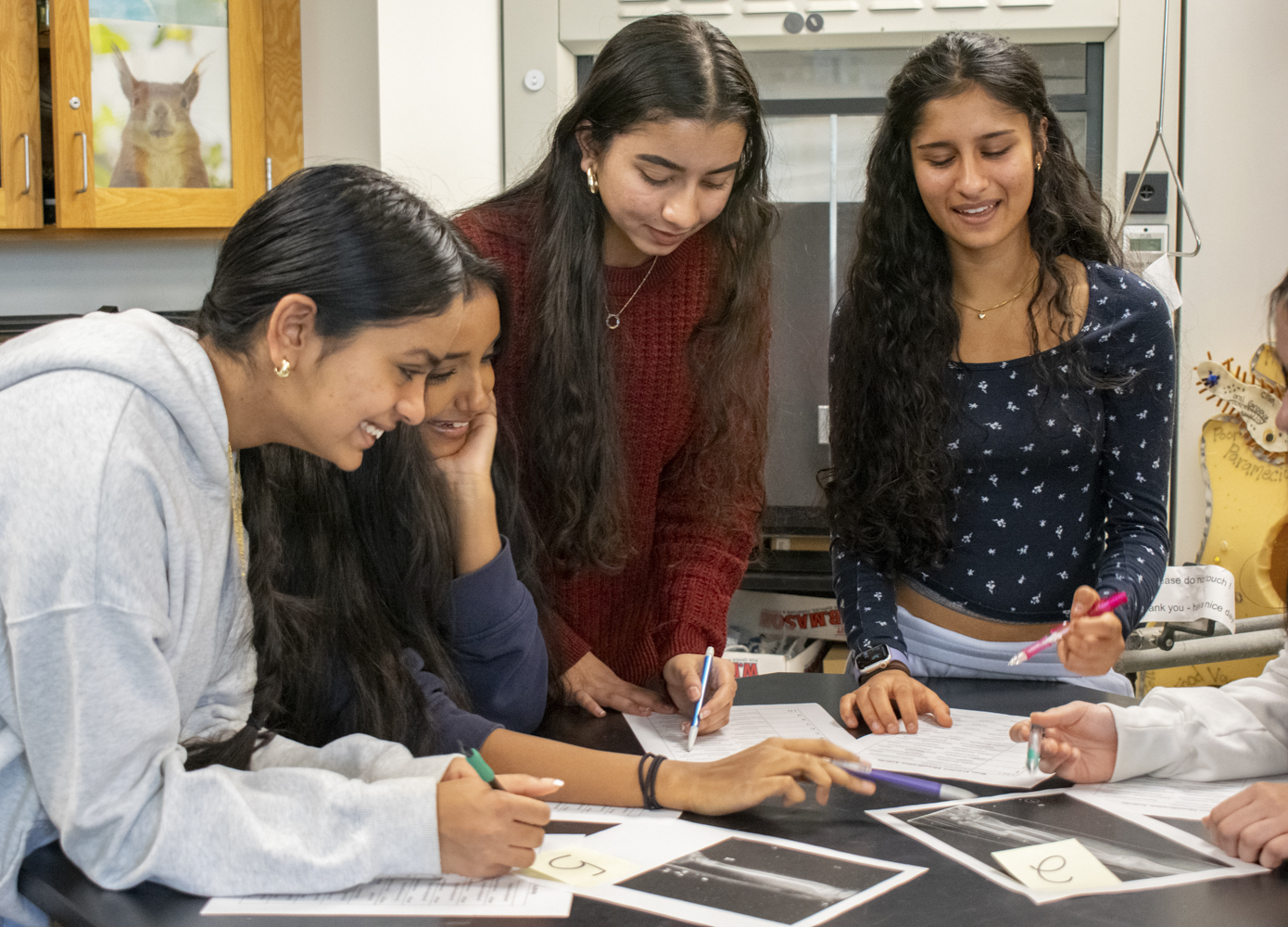
Even as global change to support girls in STEM moves slowly, Algonquin and surrounding communities continue to make significant strides to improve the issue through inclusive programs, empowering clubs and a general culture that encourages girls to pursue their passions in STEM.
“I think we live in a nice bubble here in New England where [girls and women] feel the most respected, but there are still instances where I feel [the gender bias], and I know other people feel it,” Drake said. “It’s unfortunate, so I hope for change.”
Today, while challenges still exist, participation and the impact of women in STEM continue to grow.
“In recent years we have seen a push for women to feel confident in joining STEM,” Drake said.
Drake believes that more women in STEM fields will have only positive impacts and wider-scale representation of a range of perspectives.
“[Women] bring representation to about 50% of the population, and that’s going to provide all different types of perspectives that wouldn’t be represented otherwise,” Drake said. “It’s a representation of half the population.”
As these actions are being taken both locally and globally to lift girls in STEM, Drake encourages girls to look up to idols in STEM for inspiration.
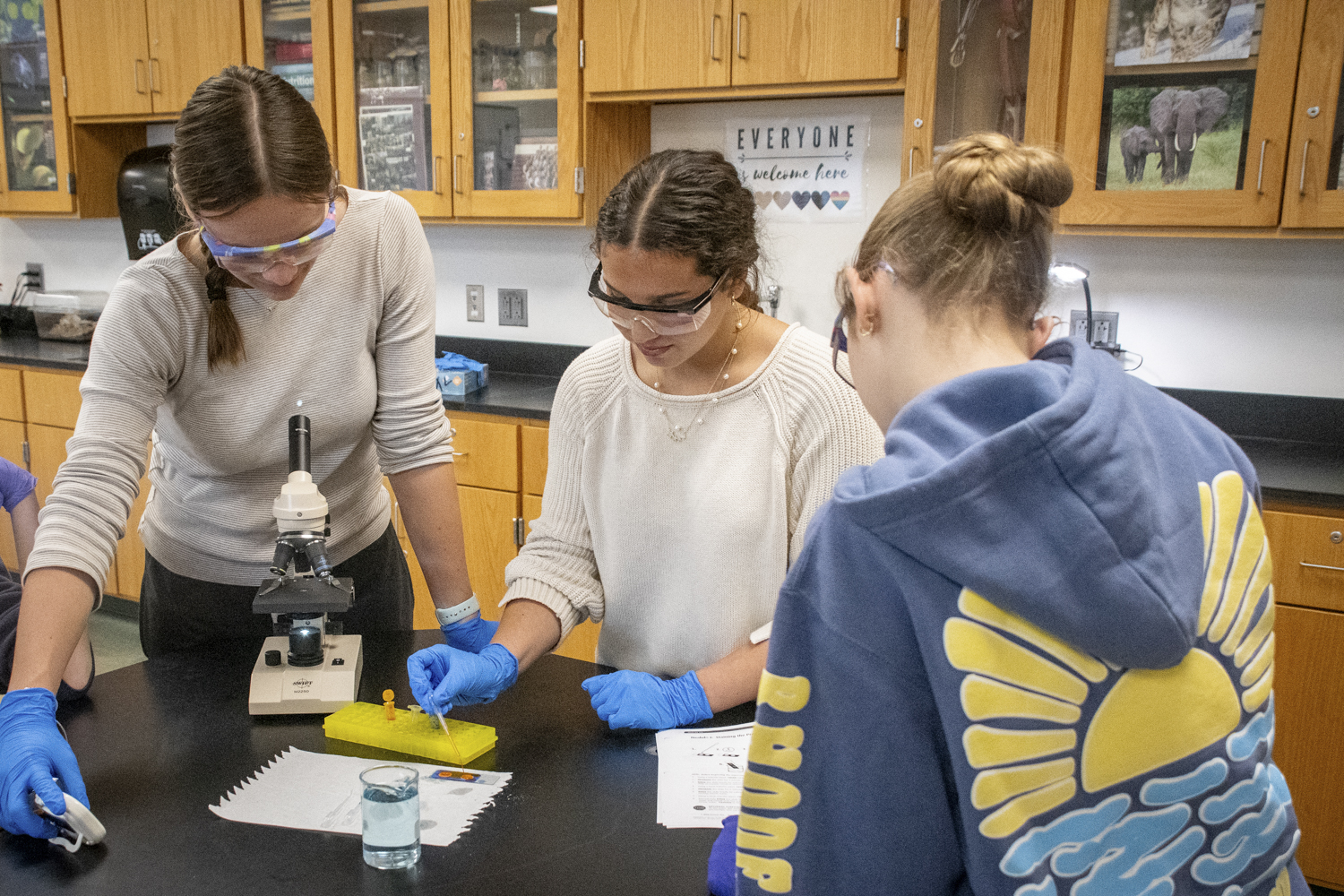
“If you look back on historical figures, women in science who have paved the way for certain things, it’s incredible,” Drake said. “Look to those people to inspire you because they’re not always talked about, they don’t always get the credit they deserve, but they’re out there and they’ve done things that have taken us really, really far.”
In the end, it is important for girls to gain the confidence to follow their passions.
“If you love it, go for it,” Drake said.