


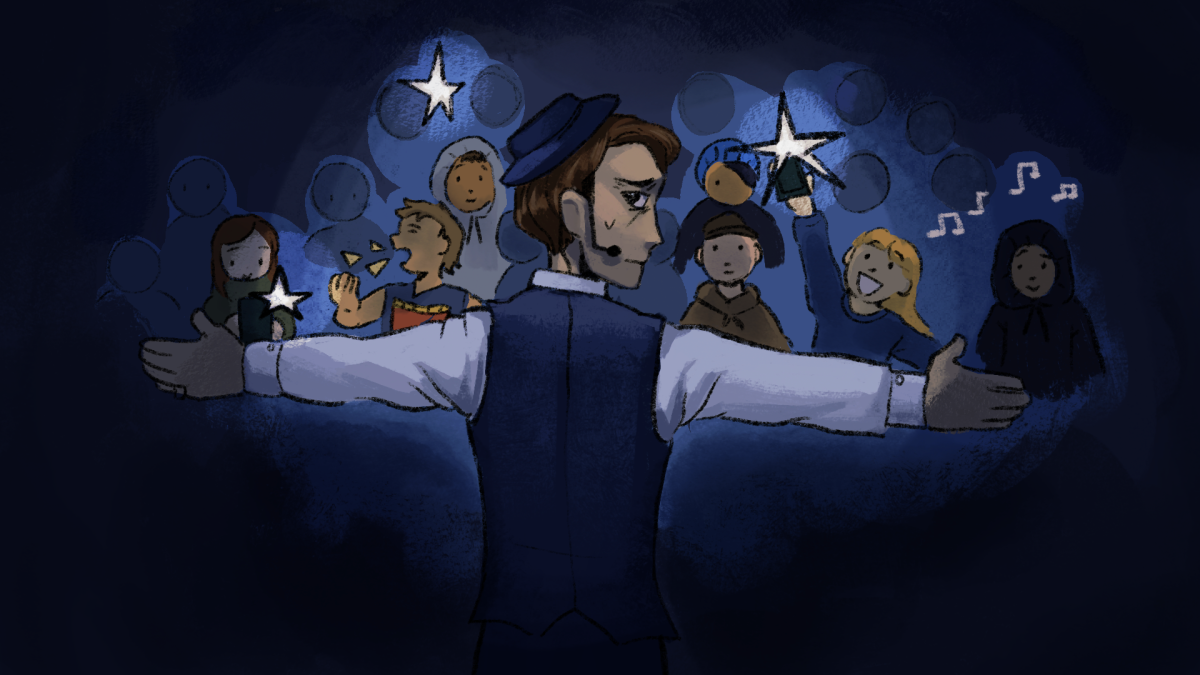
I was scrolling on TikTok recently when I saw a video clip of one of my favorite actors, Jack Wolfe, playing Orpheus in the musical “Hadestown” on Broadway. A smile came to my face as I could see something that I wouldn’t likely ever get to experience live. But then it struck me: why has it become so normalized to film actors illegally? Why can’t we just live in the moment and respect the cast that worked so hard? This is just one of the many issues of audiences for live performances; people have forgotten the importance of theater etiquette when in public.
Professional theater used to be an occasion, where audiences would dress up out of pure respect for the performers, creating a feeling of actually wanting to be there. Now, it is increasingly common to see people wearing sweatpants, hoodies and other casual clothes to these performances. While comfort is important, the shift reflects how theater, once praised and thought of as a formal event, is now interchangeable with any other daily activity.
Eating and drinking during the shows is another significant problem that needs to be adjusted. This is not a movie theater, where background noise is expected. The crunch of a snack wrapper or a slurp of a drink can take anyone away from a performance, where every moment is important. Theaters also share some of this responsibility because they have begun selling snacks and drinks intended only for intermission, yet people still take them to the theater. What might seem like a fun treat to one person is an annoyance to others nearby, who can hear crunching and sipping. Trust me; they would much rather listen to the music on stage than to someone’s crunching noises.
There also seems to be a growing lack of urgency and punctuality. Late arrivals disrupt the flow of the show, forcing the ushers to turn on their flashlights to guide people to their seats in the darkness. Though these small flashlights may not seem significant, they stand out sharply in a dimly lit theater. In the past, arriving late often meant waiting for intermission to be seated, reinforcing the need to get there on time. Today, this consequence has faded, distracting the audience and actors in the process.
The line between a concert and a theatrical performance has also become increasingly blurred. At concerts, singing along and cheering loudly is encouraged, but a play or musical should have an entirely different atmosphere. Applause and reactions have their place, but when they happen at the wrong moments, they can disrupt the performers. I have seen many shows, and there are always people obnoxiously cheering at the wrong times, and even some “mega-fans” who decide to sing along. While this enthusiasm is appreciated, it needs to be appropriate.
Live theater used to be one of the most popular forms of entertainment, and attending a performance carried a sense of formality and respect. Today, with access to streaming services, digital media and “slime-tutorials” (a name dubbed for full-length recordings of musicals on YouTube), attention spans have grown shorter, and people no longer know how to behave when watching a live performance.
The next time you attend a live performance, think about the actors for a second. Put away your food, be prompt, do not record and cheer at inappropriate times. This will permit theaters to stop being so strict when it comes to certain rules, and also will show the performers that you respect them and want them to perform their best for you.
Theater etiquette is not just about being traditional, but about respecting people who have worked so hard to put on the best version of a play for the audience, including the cast, the crew and even the audience member who waited so long for this moment. This etiquette needs to return to the way it was before, so people can be attentive and considerate, and let the performers shine.


