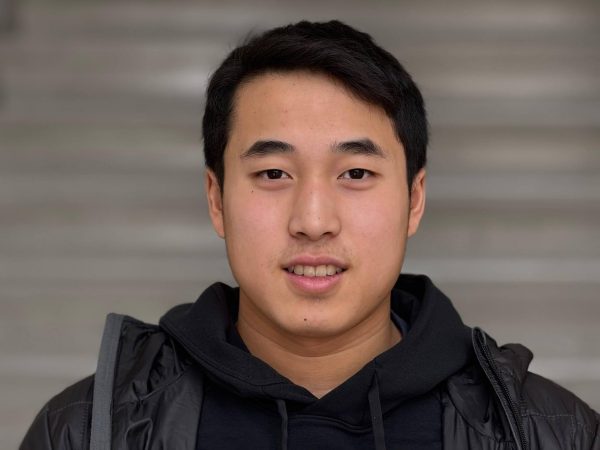




AP Business & Finance is a college-level, year-long course taught by Kristine Norrman aimed at introducing students to business operations and financial literacy.
Please describe the new course you will be teaching, including main objectives, projects or focus.
“This new AP course is a part of the career kickstart, which is training to get students to take AP courses with more transferable skills. In terms of projects, one of them will be a financial advisor project and another will be a business plan. Overall, the main focus is preparing them for business factors in the outside world.”
Why should students take this course?
“I really like this course because it’s a non-traditional AP course that’s just geared towards sophomores, juniors and seniors. It’s applicable even if students don’t go into the business world because there’s so many transferable skills.”
Why do you think this course is beneficial to be offered at Algonquin?
“I think getting into college is expensive. So, getting as much potential college credit before you go off to college is super helpful. But at the same time, college isn’t for everyone, so having some of these skills and getting people prepared for the real world, no matter what they decide to do, is important as well.”
What are you most looking forward to about teaching this course?
“I’ve never taught an AP course before, so I’m super excited for that and seeing how it all comes together.”
Is there anything else you’d like to add?
“I think the cool thing about this course is it’s backed by the Chamber of Commerce, so it’s something that people can put on their resumes either for college or for jobs. The other thing I like about this is that it’s more of a project based, hands-on course, rather than a sit-down, listen-to-a-lecture and take-traditional-tests kind of course.”

Working with Young Children, (CP/H) taught by Susan Muise, is a new semester-long course with a prerequisite of Early Childhood Development. Students will explore various careers both within and outside of the world of child education while also working in the on-campus preschool and hearing from guest speakers.
Please describe the new course you will be teaching, including main objectives, projects or focus.
“I’ve come to discover that a lot of students are taking [Early Childhood Development] because they want to work with kids in some way, but they don’t necessarily want to be teachers. My plan for the new class is to incorporate more opportunities, like having guest speakers and working on career research. [They’ll research] not just the career itself, but also how to get to that point, what experiences would be necessary, if there are certificate programs and if a college degree is required. Then, is it something that is going to provide you with the salary that you are looking for? Does the cost of the pathway outweigh the yearly salary?”
Why should students take this course?
“I think that if students are interested in learning more about other careers working with children, then it would be a great opportunity for people to have those exploratory opportunities, not only from the point of view of assignments, but also from real people in those positions.”
Why do you think this course is beneficial to be offered at Algonquin?
“There is a lot of conversation that I am overhearing about students wanting to be ready for college. [Talking about life after high school] seems to be a common theme in conversation around schools, and I think that [this course] will provide students with more opportunities to explore deeper into some of those options that they might have.”
Will the class be Honors, CP or both?
“It is going to be offered at both levels, college prep and honors, and will be run simultaneously. So, it will be one period with both CP and honors students in the same block.”


Taught by Michelle Sheppard, Graphic Design for Everyday Life is a new semester-long course (CP/H) that will explore design principles and help students understand why certain visual choices are more appealing than others.
Please describe the new course you will be teaching, including main objectives, projects or focus.
“This is graphic design that anyone can do. It will be about some of the things that we might not expect [design] software to do, like Canva or Adobe. Projects will be relevant to students’ lives. I don’t want students to feel like they have to do something that doesn’t connect to them. Maybe they want to use these tools to create buttons, to bring awareness to a cause or promote a band that they’re in. Maybe they want to learn how to use graphic design well to create branding.”
Why should students take this course?
“I think it’s really important that everybody, no matter what field you’re going into, can figure out how to use Canva on their own. [This class] will be some of the technical things that might not be immediately apparent in a software like Canva or Adobe Express, but it will also be about understanding why those designs work, so that you can use those principles to make whatever products you’re expected to in whatever field you’re going into. How might you be using [graphic design] in the STEM fields? How might you be using it as a humanities major?[It’s] really about helping the students have an understanding of graphic design to help them out in whatever career path they choose.”
Why do you think this course is beneficial to be offered at Algonquin?
“I think graphic design is important in all of our lives and whatever fields people are going into. We didn’t have a class [in the past] that was making graphic design accessible to everyone. We have a lot of people in our school that could enjoy graphic design and could be using it in their everyday lives.”
Will the class be Honors, CP or both?
“Both, and I assume—like all the classes I teach—mixed together. So far, we’ve always run honors in CP and visual art courses at the same time. If [students are] not sure about what level to take, put something down and you can change when you hear the teacher describe the criteria on the first day.”


Intermediate Guitar is a semester-long course (CP/H) taught by Eric Vincent with a prerequisite of Beginning Guitar, or past and current guitar lessons. This class will continue the curriculum of Beginning Guitar and allow students to further develop their musicianship.
Please describe the new course you will be teaching, including main objectives, projects or focus.
“It’s essentially a continuation of the Beginning Guitar class. It would be offered for either students who have taken [Beginning Guitar], students who have taken private lessons, or have other experience outside of school, and are already somewhat proficient in guitar.”
Why should students take this course?
“I think overall, the students who have taken the Beginning Guitar class have really enjoyed it, and a lot of them come back and take other music electives here. We’ve always had students ask if there’s an intermediate guitar class offered. This gives those students a chance to go to the next level.”
Why do you think this course is beneficial to be offered at Algonquin?
“I’ve been teaching the Beginning Guitar class now for a few years, and I think the kids who have taken that class have enjoyed it, and it’s not the end of the road when you get your fundamentals done. It’s an offering that gives [students] the next thing down the line.”
What are you most looking forward to about teaching this course?
“I’ve been playing guitar for almost 30 years, and I love it. I still go home and practice every day. One of the reasons I love teaching music is just sharing that passion with students. This is my bread and butter here, so being able to share that with students and expose them to different music that they might not be familiar with, and different styles and techniques.”
Will the class be Honors, CP or both?
“Just like our Beginning Guitar class, they’re taught in the same section, but the expectations and requirements are a little different.”
Is there anything else you’d like to add?
“I hope you sign up.”

Intermediate Piano is a semester-long course (CP/H) taught by Olivia Golliger with a prerequisite in Beginning Piano or past and current piano lessons. This class will continue the curriculum of Beginning Piano and allow students to further develop their piano skills.
Please describe the new course you will be teaching, including main objectives, projects or focus.
“Intermediate Piano is a continuation of Beginning Piano. In Beginning Piano, we cover half of the book that students are given; Intermediate Piano would be the second half of the book. It’s also available to students who have taken piano lessons before and are comfortable with note reading. My goal with Intermediate Piano is a continuation of not only the curriculum, but also the long-lasting musicianship that I’m trying to build in for my students.”
Why should students take this course?
“Music is an important part of the human experience, and learning to do something new, or to continue progressing in their skill, is always a worthwhile endeavor.”
Why do you think this course is beneficial to be offered at Algonquin?
“It’s a chance for students to try something new or to continue to develop something that isn’t typical in a school day.”
What are you most looking forward to about teaching this course?
“I’m really excited to have students that I’ve had in Beginning Piano and help them progress further with their goals. When I get to work with the larger demographic that’s at Algonquin in a semester-long course, it opens up my world to meeting more of the students that are here, and it makes the music department a little more visible.”
Will the class be Honors, CP or both?
“It’s both together. The differences between the two are what’s expected of [students] for playing tests.”
Is there anything else you’d like to add?
“I’m excited to see old students and to welcome new people into the program.”


Evolution of Style Through Fashion Technology is a semester-long course (CP/H) taught by Nicole Ruffo. It dives into the history of fashion while allowing students to pursue their own interests and ideas through fashion.
Please describe the new course you will be teaching, including main objectives, projects or focus.
“Students are going to focus on the history of fashion, and pull fashion from a particular era. Hopefully students can bring their own style to the class to do cool things like creating garments and accessories. It’s an open ended class where kids can do what they want in the structure of the history of fashion.”
Why should students take this course?
“Number one it’s fun, and number two it’s something completely different than what they are taking in their current classes. If you like fashion, music, history and creating stuff, this class is like a pick your own adventure book, where the lecturer would be presenting you with the history of fashion, and the student does what they want to do with it in your own structured space of creativity.”
Why do you think this course is beneficial to be offered at Algonquin?
“This course is just a next step to the greatness Algonquin has. The kids are choosing what they want to do under the guidance of a lecturer. Just imagine walking into a class of 15 kids and everyone in the class is going to the same goal but are taking different paths that they want to take toward that goal. Hopefully their learning experience is appreciated a little more because they can walk themselves up their own mountain and experience something different.”
What are you most looking forward to about teaching this course?
“Getting to know students in a different light because in most business classes I teach, I’m giving students information they have to learn. In this class, the students are going to give me information that I have to learn. I’m going to sit and find out that one student loves music and made a pair of jeans based on their favorite band. I just think as an instructor, because you’re flipping the way you instruct, you’re going to learn more about your students that I’ve had in previous classes. That’s what’s fun for me; it’s so different and it’s not a traditional way of teaching.”
Will the class be Honors, CP or both?
“Both.”
Is there anything else you’d like to add?
“Teenagers have such a unique perspective of life; they have an understanding of what’s cool, interesting and fun. This teen-targeted market drives so much in our economic world in terms of fashion. Teenagers have so much power, and I want the students to know they are a huge market that can do so many great things. I hope they get to understand that and leave here believing in themselves. Believing their style is cool and knowing they can go out and make money doing whatever they want, but believing in themselves. I want to realize that all styles are cool; you can’t teach it, it’s just in you.”


Taught by Karla Reynolds, Data & Decisions (CP/H) is a semester-long class that focuses on teaching students how to incorporate real-world data into their day-to-day lives.
Please describe the new course you will be teaching, including main objectives, projects or focus.
“It’s going to be a project-based course that delves into data and uses data to make real-world decisions. Since data is so important in the world at this point, with all of the studies and large amounts of data that you have to figure out what to do with.”
Why should students take this course?
“It’s applicable to any field a student is interested in because there is data in physiology, in sciences, obviously, and even in teaching. You have to use a lot of data, and you can see the real-world application, unlike Pre-Calc (I teach pre-calc, so not to diss Pre-Calc), but there are a lot of students that are not going to use that in their life.”
Why do you think this course is beneficial to be offered at Algonquin?
“[Knowing how to use data is] such an important skill to have, so when you’re reading something or in your job, you know what is true and what is not true.”
What are you most looking forward to about teaching this course?
“The real-world applications and also that it’s going to be more project-based, so there’ll be a little teaching, but it’s also students learning together, and I think there’ll be some great discussions around topics in the news, so it’s not just that I teach you how to do something and then you do it.”
Will the class be Honors, CP or both?
“It’s going to be offered at both. It’s going to be a mixed honors and CP, so that way, people can change levels if they want once they see what the course is like. Also, I think it will help both groups grow academically if you have them together.”
Is there anything else you’d like to add?
“Everyone should take the course.”

Sculpture is a returning semester-long course (CP/H) that will be taught by Danielle DiCiero, diving into the creation of sculpture through a variety of materials and developing students’ artistic process as well as creativity.
A donation of $40 or more includes a subscription to the 2025-26 print issues of The Harbinger. We will mail a copy of our fall, winter, spring and graduation issues to the recipient of your choice. Your donation supports the student journalists of Algonquin Regional High School and allows our extracurricular publication to purchase equipment and cover our annual website hosting costs.