


One of the most peaceful and prosperous eras in United States history was the “Era of Good Feelings,” which followed the War of 1812. During this era, there was a great sense of national unity and cooperation between the political parties. Given the current state of American politics, I highly doubt we will ever see an era like this for a very long time. American politics nowadays is incredibly polarized and divided, and, in many ways, we seem to be in the “Era of Bad Feelings.”
Although political polarization, the widening gap between the policy positions of political parties and the overall shift to extremist positions, may seem intense today, history shows that this is not a new phenomenon. Despite leading to important social change, political polarization has also caused tragedies, reminding us that progress must be achieved through peaceful means rather than violence.
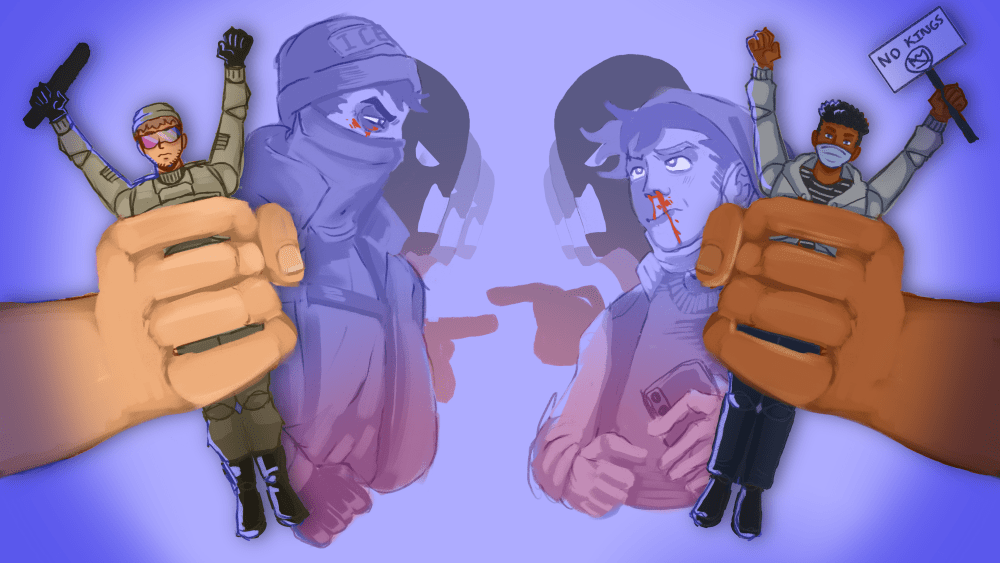
Current polarization has been especially evident in these past few months, such as No Kings Day, the recent protests against ICE in Minnesota and the various pro-ICE rallies. While many protests remained peaceful, some moments escalated into violent confrontations, such as those in Minneapolis, which exemplifies how political divisions can quickly become violent when peaceful approaches break down. Many other important issues remain unresolved which contributes to the increase in polarization, like the release of the Epstein files and debates about gun control. Despite the current political climate being stressful and polarized, unity isn’t hopeless, and change is possible if effective actions are taken.
One area of extreme political polarization we should learn from was the Antebellum era, the era leading up to the Civil War, spearheaded by congressional deadlocks and brutal moments of violence. A prime example is what has since been called Bleeding Kansas from 1854 to 1859. This conflict arose as people flooded into Kansas to vote on slavery, often resorting to violence to sway the election. This era was also marked by little to no compromise between Democrats and Republicans, directly paralleling the same struggles in Congress today, where compromise between the two parties is often challenging, to say the least. Ultimately, this era would lead to the devastating Civil War and emphasizes how polarization without compromise can escalate into conflict, highlighting the need for a peaceful resolution.
In contrast, the Civil Rights movement, despite moments of violence, still achieved major change through mostly nonviolent actions. The movement was able to secure more rights and protections for African Americans despite facing devastating consequences, like the assassinations of Malcolm X in 1965 and Martin Luther King Jr. in 1968. Despite these tragedies and the massive amounts of opposition, the movement held its course and ultimately achieved many of its goals without resorting to violence, mainly in part due to its disciplined leadership, rational strategy and a commitment to peace. This era shows how, amid polarization and violence, progress remains possible through nonviolent strategies. The results produced were largely because the civil rights movement grew into a well organized and disciplined movement to the point where it became too large and visible for political leaders to ignore. Its peaceful pressure and public support forced engagement at the highest levels of government, as seen in meetings between civil rights leaders such as Martin Luther King Jr. and President John F. Kennedy.
These social changes, during times of extreme polarization, came at a high cost. Some may argue that this polarization was necessary for reforms, but at what cost? Today, political tensions have sometimes resulted in violence, including recent incidents like the killing of Renee Good, death of Alex Pretti and the assassination of Charlie Kirk, which raised tensions across the nation and not only revealed division, but also further amplified it. We, too, must not fall into the same mistakes that caused our history violence and death.
So, what can we do and what do we need to do? History shows us that change is possible even in times like these. Yet, it is only possible when movements are organized, disciplined and committed to nonviolence. Despite our nation going through some of its most complex issues, we must come together and seek common ground in political debates. We must not let prejudices decide our interactions or dismiss the valid concerns of others. Today, individuals can make a difference by staying informed and taking constructive action without resorting to escalations or anger. At the same time, it is important to hold our political leaders accountable. They should listen to our concerns and address problems without increasing division. By integrating action at the individual level with nonviolent accountability of leadership, it still remains possible to make change and avoid tragedies that have left lasting scars on our country.
One of our greatest presidents of all time, Abraham Lincoln, warned, “America will never be destroyed from the outside. If we falter and lose our freedoms, it will be because we destroyed ourselves.” Lincoln was right. Our biggest threat is us. Division comes internally, and it is our responsibility to preserve our democracy through unity and understanding. We must demand empathy and open minds from our lawmakers on both sides of the aisle, and we, as Americans, must hold ourselves to the same standards.


Cindy Cote • Mar 5, 2026 at 5:51 pm
Incredibly insightful! Your very correct, we must hold our elected politicians to the conditions entrusted them to uphold.
I also wonder if Americans could be more mindful of others and maybe consider meeting other Americans in the middle. 🤔
In the end, humanity is at risk here.